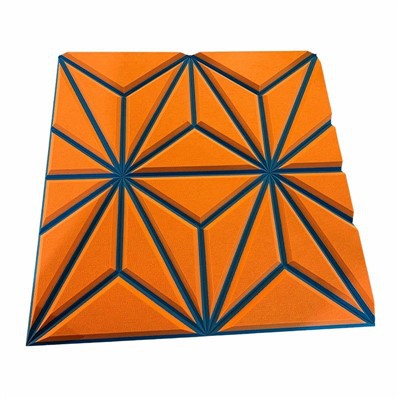

When it comes to acoustic treatment, two popular options are felt acoustic panels and foam acoustic panels. As a supplier of felt acoustic panels, I've had the opportunity to see firsthand how these two types of panels compare in various applications. In this blog post, I'll explore the differences between felt and foam acoustic panels, highlighting their unique features, advantages, and limitations.
Acoustic Performance
One of the primary considerations when choosing acoustic panels is their ability to absorb sound. Both felt and foam panels are designed to reduce echo and reverberation, but they achieve this in different ways.
Felt acoustic panels are made from natural or synthetic fibers that are compressed and bonded together. The dense, fibrous structure of felt allows it to trap sound waves and convert them into heat energy. This results in excellent sound absorption across a wide range of frequencies, making felt panels effective at reducing both high and low-frequency noise.
Foam acoustic panels, on the other hand, are typically made from polyurethane foam. The open-cell structure of foam allows sound waves to penetrate the material and bounce around inside, where they are gradually absorbed. Foam panels are particularly effective at absorbing high-frequency sound, but they may not be as effective at low frequencies.
In general, felt acoustic panels offer better overall sound absorption than foam panels, especially at low frequencies. However, the specific acoustic performance of each type of panel will depend on factors such as the thickness, density, and installation method.
Aesthetics
Another important factor to consider when choosing acoustic panels is their appearance. Felt acoustic panels are available in a wide range of colors, textures, and patterns, making them a versatile option for any interior design scheme. They can be used to create a variety of looks, from modern and minimalist to warm and inviting.
Foam acoustic panels, on the other hand, are typically available in a limited range of colors and textures. They are often used in industrial or commercial settings where aesthetics are not a primary concern. However, some foam panels are now available in more decorative designs, making them a more attractive option for residential applications.
In terms of aesthetics, felt acoustic panels offer more flexibility and creativity than foam panels. They can be used to create a unique and personalized look that enhances the overall design of a space.
Durability
Durability is another important consideration when choosing acoustic panels. Felt acoustic panels are generally more durable than foam panels, as they are made from a dense, fibrous material that is resistant to wear and tear. They are also less likely to sag or deform over time, making them a long-lasting option for acoustic treatment.
Foam acoustic panels, on the other hand, are more prone to damage and wear. They can be easily punctured or torn, and they may lose their shape over time. Additionally, foam panels are more susceptible to moisture and mold, which can reduce their effectiveness and lifespan.
In general, felt acoustic panels offer better durability and longevity than foam panels. They are a more reliable option for acoustic treatment in high-traffic areas or environments where the panels may be exposed to moisture or other elements.
Environmental Impact
In today's environmentally conscious world, many people are looking for sustainable and eco-friendly options for acoustic treatment. Felt acoustic panels are a more sustainable option than foam panels, as they are made from natural or synthetic fibers that are biodegradable and recyclable. They also require less energy to produce than foam panels, making them a more environmentally friendly choice.
Foam acoustic panels, on the other hand, are typically made from petroleum-based materials that are not biodegradable or recyclable. They also require a significant amount of energy to produce, which can have a negative impact on the environment.
In terms of environmental impact, felt acoustic panels are a more sustainable and eco-friendly option than foam panels. They are a great choice for those who are looking to reduce their carbon footprint and make a positive impact on the environment.
Cost
Cost is always a consideration when choosing acoustic panels. Felt acoustic panels are generally more expensive than foam panels, as they are made from a higher-quality material and require more labor to produce. However, the cost of felt panels can vary depending on factors such as the size, thickness, and design of the panels.
Foam acoustic panels, on the other hand, are generally less expensive than felt panels. They are a more affordable option for those who are on a budget or who need to cover a large area with acoustic treatment.
In general, the cost of felt acoustic panels is higher than that of foam panels. However, the additional cost may be worth it for those who are looking for a high-quality, durable, and aesthetically pleasing acoustic solution.
Conclusion
In conclusion, felt acoustic panels and foam acoustic panels both have their own unique features, advantages, and limitations. Felt panels offer better overall sound absorption, aesthetics, durability, and environmental impact, but they are also more expensive. Foam panels, on the other hand, are more affordable and effective at absorbing high-frequency sound, but they may not be as durable or aesthetically pleasing.
As a supplier of Felt Acoustic Wall Panel, I believe that felt panels are the superior choice for acoustic treatment. They offer a combination of high performance, durability, and aesthetics that is hard to beat. However, the best choice for you will depend on your specific needs and budget.


If you're interested in learning more about felt acoustic panels or would like to discuss your acoustic treatment needs, please don't hesitate to contact us. We would be happy to help you find the perfect solution for your space.
References
- Acoustical Society of America. (n.d.). Acoustics Basics. Retrieved from https://acousticalsociety.org/about-acoustics/acoustics-basics/
- International Organization for Standardization. (2009). ISO 11654:2009 Acoustics - Sound absorbers for use in buildings - Rating of sound absorption.
- National Institute of Standards and Technology. (n.d.). Acoustics. Retrieved from https://www.nist.gov/topics/acoustics