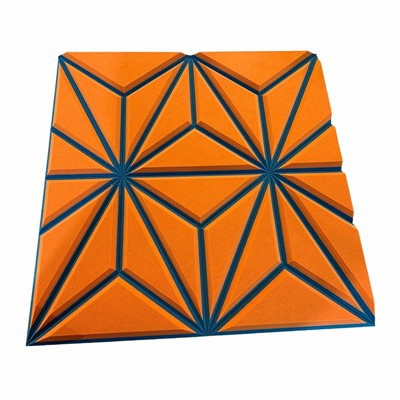

In industrial and urban landscapes, areas with high - level vibration present unique challenges when it comes to noise control. As a leading supplier of Acoustic Screen, we've witnessed firsthand the importance of understanding how these acoustic solutions perform under such strenuous conditions.
The Science Behind Acoustic Screens
Acoustic screens are designed to mitigate the transmission of sound waves from a source to a receiver. They work based on the principles of absorption, reflection, and diffraction of sound. Absorption occurs when the sound energy is transformed into heat energy within the acoustic material. Reflection bounces the sound waves back towards the source, and diffraction bends the sound waves around the edges of the screen.
In a normal, static environment, acoustic screens are highly effective. They can be made from various materials, such as fiberglass, mineral wool, and perforated metal sheets, each with different acoustic properties. These materials are carefully chosen to optimize the reduction of noise based on the frequency range of the noise source.
Impact of Vibration on Acoustic Performance
However, when installed in areas with high - level vibration, the performance of acoustic screens can be significantly affected. Vibration introduces a dynamic factor that disturbs the normal working mechanism of acoustic screens.
First, vibration can cause the acoustic material within the screen to shift or move. For example, if the screen is filled with loose - fiber insulation material like fiberglass, the vibration can cause the fibers to compact unevenly. This uneven compaction reduces the screen's ability to absorb sound because the sound waves may no longer travel through the matrix of fibers as effectively. The change in density disrupts the sound - absorbing channels, which are crucial for converting sound energy into heat.
Second, vibration can cause structural resonance within the acoustic screen. When the frequency of the vibration matches one of the natural frequencies of the screen's structure, resonance occurs. Resonance amplifies the vibration of the screen, causing it to act as an additional source of noise rather than a noise barrier. This self - generated noise can counteract the screen's intended function of blocking external noise.
Moreover, continuous vibration can lead to mechanical wear and tear on the acoustic screen. The joints and connections between different components of the screen may loosen over time. Gaps can form, allowing sound waves to pass through more easily than the undamaged screen would typically allow. This degradation of the physical integrity of the screen directly impacts its acoustic performance.
Strategies for Improving Performance in High - Vibration Areas
At our company, we've developed several strategies to enhance the performance of Acoustic Screen in high - vibration environments.


Material Selection
We choose materials that are more resistant to vibration - induced compaction. For instance, instead of relying solely on loose - fiber materials, we often incorporate rigid acoustic foams. These foams have a stable structure that is less likely to be affected by vibration. They maintain their density and porosity, ensuring consistent sound absorption capabilities even under dynamic conditions.
Another approach is to use composite materials. By combining different types of materials with complementary properties, we can create a screen that is not only acoustically effective but also vibration - resistant. For example, a layer of perforated metal can provide mechanical strength and resist deformation due to vibration, while an inner layer of acoustic foam can absorb sound.
Structural Design
Our engineers pay close attention to the structural design of the acoustic screens. We use damping techniques to reduce the amplitude of vibration. Damping materials are added to the screen's structure, which convert the vibrational energy into heat energy. This reduces the likelihood of resonance and helps to maintain the screen's stability.
We also reinforce the joints and connections of the screen. Bolts, welds, and adhesives are used strategically to ensure that the different components of the screen remain firmly attached even under high - level vibration. Specialized gaskets are placed at the edges to prevent the formation of gaps due to movement.
Installation
Proper installation is crucial. In high - vibration areas, we use flexible mounts to isolate the acoustic screen from the vibrating structure. These mounts act as shock absorbers, reducing the amount of vibration transferred to the screen. We also ensure that the screen is installed at an appropriate distance from the source of vibration to minimize the direct impact of the vibrations.
Real - World Applications and Case Studies
Over the years, we've supplied Acoustic Screen for various high - vibration applications.
In a large manufacturing plant, heavy machinery caused significant vibration and noise. Our acoustic screens were installed around the machinery to reduce the noise emissions. Initially, the performance was not satisfactory due to the vibration. However, after implementing our strategies, such as using vibration - resistant materials and damping techniques, the noise level in the surrounding area was significantly reduced. The screens were able to maintain their acoustic performance over an extended period, even with the continuous operation of the heavy machinery.
In a transportation hub, trains passing through the station generated high - level vibration and noise. Our acoustic screens were installed along the railway tracks. By carefully selecting materials and designing a flexible mounting system, we were able to ensure that the screens were not damaged by the vibration and could effectively block the noise from reaching the surrounding residential areas.
Other Acoustic Solutions in High - Vibration Areas
Apart from Acoustic Screen, other acoustic products can also play a role in high - vibration areas.
Acoustic Partition can be used to divide large spaces in industrial facilities. They can provide additional noise isolation and can be designed to be more resistant to vibration. Similar to acoustic screens, the choice of materials and structural design are key factors in their performance in high - vibration environments.
Acoustic Room Divider are useful in commercial buildings with high - vibration equipment. They can create separate, quieter areas within a large open space. These dividers can be made with lightweight yet vibration - resistant materials to ensure both portability and acoustic effectiveness.
Acoustic Lighting is an innovative solution that combines lighting and acoustic functions. In high - vibration areas, these fixtures can be designed to be more stable and less affected by the vibrations while still providing effective sound absorption.
Contact Us for Your Acoustic Needs
If you're facing noise control challenges in high - vibration areas, our team of experts is ready to assist you. We have the knowledge and experience to provide customized Acoustic Screen and other acoustic solutions that can meet your specific requirements. Whether you're in the manufacturing, transportation, or commercial sector, we can work with you to design and install the most suitable acoustic products for your environment. Reach out to us to start a conversation about your acoustic project.
References
- Beranek, Leo L., and Tim J. Crocker. "Noise and Vibration Control Engineering: Principles and Applications." Wiley, 2012.
- Fahy, Frank J., and Malcolm J. Crocker. "Foundations of Engineering Acoustics." Academic Press, 2007.