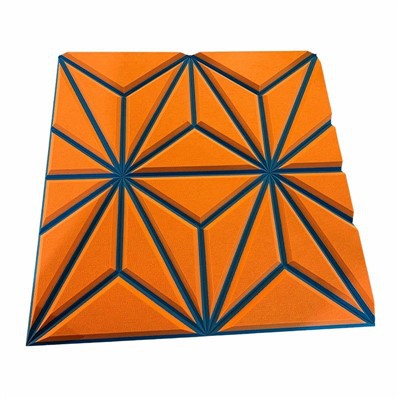

Hey there! I'm a supplier of V Cut Panels, and today I'm gonna talk about the materials used for these awesome panels. V Cut Panels are super popular in the world of acoustics, and knowing what they're made of can help you make the right choice for your next project.
Wood
Wood is one of the most common materials for V Cut Panels. It's a natural choice, and it has a warm, inviting look that can enhance the aesthetic of any space. There are different types of wood that can be used, like oak, maple, and pine.
Oak is a strong and durable wood. It has a beautiful grain pattern that gives the V Cut Panels a high - end look. The density of oak also makes it a good option for sound absorption. It can help reduce echoes and reverberation in a room, making it ideal for places like recording studios, theaters, and conference rooms.
Maple is another great choice. It's known for its smooth finish and light color. Maple V Cut Panels can brighten up a space and add a touch of elegance. They're also relatively easy to work with, which means they can be customized to fit different design requirements.
Pine is a more budget - friendly option. It's a softwood, but it still offers decent sound - absorbing properties. Pine V Cut Panels are often used in residential settings, like home theaters or music rooms, where cost is a factor.


MDF (Medium - Density Fiberboard)
MDF is a man - made material that's widely used in the production of V Cut Panels. It's made by combining wood fibers with a resin and pressing them together under high pressure.
One of the advantages of MDF is its consistency. Unlike natural wood, which can have variations in grain and density, MDF has a uniform structure. This makes it easier to cut and shape into V Cut Panels with precise dimensions.
MDF is also a great substrate for other finishes. It can be painted, veneered, or laminated to achieve different looks. For example, you can apply a wood veneer to MDF V Cut Panels to give them the appearance of real wood, at a lower cost.
However, MDF is not as strong as solid wood. It can be prone to moisture damage if not properly sealed. So, in areas with high humidity, extra precautions need to be taken to protect the panels.
Mineral Wool
Mineral wool is a popular choice for acoustic V Cut Panels. It's made from natural minerals, like basalt or slag, which are melted and spun into fibers.
The main advantage of mineral wool is its excellent sound - absorbing properties. It can effectively reduce noise levels by trapping sound waves within its fibrous structure. This makes it ideal for use in commercial buildings, such as offices, schools, and hospitals, where a quiet environment is crucial.
Mineral wool is also fire - resistant. It has a high melting point, which means it can help prevent the spread of fire in case of an emergency. This is an important safety feature, especially in public spaces.
Another benefit of mineral wool is its thermal insulation properties. It can help keep a room warm in the winter and cool in the summer, reducing energy costs.
Foam
Foam is another material used for V Cut Panels, especially in the field of acoustics. There are different types of foam, such as polyurethane foam and melamine foam.
Polyurethane foam is a common choice. It's lightweight and easy to work with. It comes in different densities, which can be selected based on the specific sound - absorbing requirements of a project. Polyurethane foam V Cut Panels can be used in a variety of settings, from small home studios to large concert halls.
Melamine foam is known for its high - performance sound absorption. It has a unique open - cell structure that allows it to trap sound waves effectively. Melamine foam V Cut Panels are often used in professional audio applications, where precise sound control is needed.
However, foam can be a bit more delicate compared to other materials. It can be easily damaged if not handled properly. Also, some foams may emit volatile organic compounds (VOCs), so it's important to choose low - VOC or VOC - free options.
Metal
Metal V Cut Panels are a more modern and industrial option. They're typically made from aluminum or steel.
Aluminum is a lightweight and corrosion - resistant metal. It's easy to fabricate into V Cut Panels, and it can be anodized or painted to achieve different colors and finishes. Aluminum V Cut Panels are often used in contemporary architectural designs, where a sleek and minimalist look is desired.
Steel is a stronger and more durable metal. It can withstand heavy use and is often used in high - traffic areas. Steel V Cut Panels can be powder - coated to protect them from rust and corrosion. They're also a good choice for industrial spaces, where a robust and long - lasting solution is needed.
Why Choose Our V Cut Panels?
As a V Cut Panels supplier, we offer a wide range of materials to meet your specific needs. Whether you're looking for the natural beauty of wood, the consistency of MDF, the excellent sound absorption of mineral wool, the lightweight nature of foam, or the modern look of metal, we've got you covered.
Our V Cut Panels are designed and manufactured to the highest standards. We use high - quality materials and advanced production techniques to ensure that our panels perform well and look great.
If you're interested in our V Cut Panels, or if you have any questions about the materials or the application of these panels, don't hesitate to get in touch. We're here to help you make the best choice for your project. We can also provide samples so you can see and feel the quality of our products firsthand.
If you're specifically looking for Grooved Acoustic Panel or Acoustic Tiles For Walls, we have those too. Our team of experts can guide you through the selection process and answer any questions you may have.
So, whether you're an architect, a contractor, or a homeowner, if you need V Cut Panels for your next project, reach out to us. We're ready to work with you to create the perfect acoustic solution.
References
- "Acoustic Materials Handbook" by David B. North
- "Wood Handbook: Wood as an Engineering Material" by the Forest Products Laboratory
- "Mineral Wool Insulation: Properties and Applications" by the Insulation Manufacturers Association