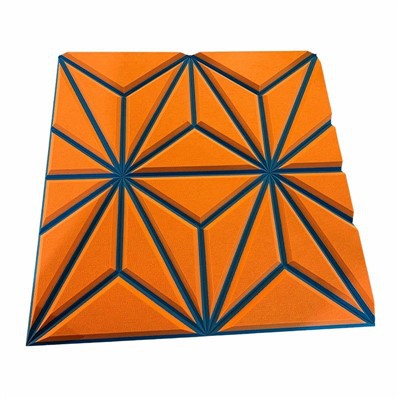

Hey there! As a supplier of Grooved Acoustic Panels, I often get asked about the recommended spacing between these panels. It's a crucial question because the right spacing can significantly impact the acoustic performance of a space. In this blog, I'll share some insights on this topic and hopefully clear up any confusion you might have.
Understanding the Basics of Grooved Acoustic Panels
Before we dive into the spacing details, let's quickly go over what Grooved Acoustic Panels are. These panels are designed to absorb sound waves and reduce echo and reverberation in a room. The grooves on the panels play a vital role in this process. They increase the surface area of the panel, allowing more sound to be absorbed.
Grooved Acoustic Panels come in various sizes, shapes, and materials. Some are made from wood, while others are made from foam or fiberglass. The choice of material depends on the specific acoustic requirements of the space and the aesthetic preferences of the customer.
Factors Affecting the Spacing of Grooved Acoustic Panels
There are several factors that you need to consider when determining the spacing between Grooved Acoustic Panels. Here are some of the most important ones:
1. Room Size and Shape
The size and shape of the room play a significant role in determining the spacing between the panels. In a small room, you might need to place the panels closer together to achieve the desired acoustic effect. On the other hand, in a large room, you can space the panels further apart.
For example, in a small home theater room, you might want to place the panels every 1 - 2 feet to effectively absorb sound. In a large auditorium, you could space the panels 3 - 4 feet apart.
2. Sound Frequency
Different frequencies of sound require different spacing between the panels. Low - frequency sounds tend to travel further and require more absorption. You might need to place the panels closer together to effectively absorb low - frequency sounds. High - frequency sounds, on the other hand, are more easily absorbed and can be managed with a wider spacing between the panels.
3. Acoustic Goals
Your acoustic goals for the space also influence the panel spacing. If you're aiming for a high level of sound absorption, such as in a recording studio, you'll need to place the panels closer together. If you just want to reduce some echo in a general office space, a wider spacing might be sufficient.
Recommended Spacing Guidelines
Based on industry standards and our experience as a Grooved Acoustic Panel supplier, here are some general guidelines for spacing:
For General Rooms
In most general rooms like offices, classrooms, or living rooms, a spacing of 2 - 3 feet between the panels is usually a good starting point. This spacing allows for a good balance between sound absorption and cost - effectiveness.
For High - Acoustic - Requirement Spaces
In spaces like recording studios, concert halls, or home theaters, you'll want to place the panels closer together. A spacing of 1 - 2 feet is recommended to ensure maximum sound absorption.
For Wall - to - Wall Coverage
If you're looking for complete wall - to - wall coverage, you can place the panels side by side with minimal gaps. This provides the highest level of sound absorption but can be more expensive.
Examples of Spacing in Different Scenarios
Let's take a look at some real - life examples to better understand how the spacing works.
Office Space
Imagine an office space that is about 20 feet by 30 feet. You want to reduce the echo and create a more comfortable working environment. You decide to install Grooved Acoustic Panels on the walls. Based on the general guidelines, you can space the panels about 2 - 3 feet apart. This will help absorb the sound and make the office a quieter place.
Recording Studio
In a recording studio, every bit of sound absorption matters. The studio is a small room, say 10 feet by 12 feet. You'll want to place the panels closer together, about 1 - 2 feet apart. This will ensure that the sound is properly absorbed and there is minimal echo, which is crucial for high - quality recordings.
Other Considerations
When installing Grooved Acoustic Panels, there are a few other things to keep in mind.
Aesthetics
The spacing between the panels can also affect the overall look of the room. You might want to create a pattern or design with the panels to enhance the aesthetic appeal of the space. For example, you could alternate the spacing or create a geometric pattern.
Installation Method
The installation method can also influence the spacing. Some panels are designed to be installed with a specific spacing in mind. Make sure to follow the manufacturer's instructions for the best results.
Related Products
If you're interested in other types of acoustic solutions, we also offer Acoustic Tiles For Walls and 3D Acoustic Panels. These products can be used in combination with Grooved Acoustic Panels to achieve even better acoustic performance.
Conclusion
Determining the recommended spacing between Grooved Acoustic Panels is not an exact science. It depends on various factors such as room size, sound frequency, and acoustic goals. By considering these factors and following the general guidelines, you can find the right spacing for your specific needs.
If you're interested in purchasing Grooved Acoustic Panels or have any questions about the spacing or installation, feel free to reach out to us. We're here to help you create the perfect acoustic environment for your space. You can find more information about our Grooved Acoustic Panel on our website.


References
- Acoustics Handbook, John Wiley & Sons
- Architectural Acoustics, Taylor & Francis