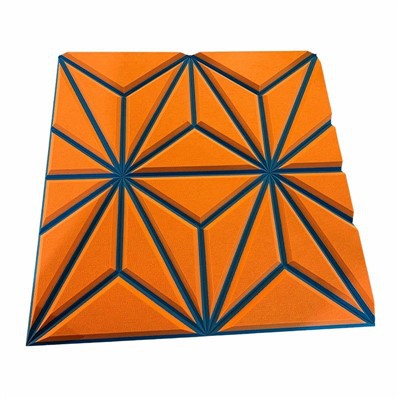

Rockets are complex engineering marvels that operate in some of the most extreme environments imaginable. During launch, they generate an immense amount of noise, which can cause a variety of problems, from structural damage to the rocket itself to potential harm to nearby personnel and equipment. This is where acoustic materials come into play. As an acoustic material supplier, I have witnessed firsthand the crucial role these materials play in the aerospace industry. In this blog, I will explore the different types of acoustic materials used in rockets and their significance.
The Importance of Acoustic Materials in Rockets
The launch of a rocket is a violent event. The engines produce an incredibly high level of noise, often reaching over 180 decibels. This intense noise can cause vibrations that may lead to structural fatigue and failure of the rocket components. Additionally, the noise can interfere with the communication systems on board the rocket and pose a risk to ground personnel and nearby infrastructure.
Acoustic materials are used to mitigate these issues by absorbing, reflecting, or damping the sound waves. They help to reduce the noise levels inside the rocket, protect the sensitive electronic equipment, and ensure the safety and reliability of the mission.
Types of Acoustic Materials for Rockets
Fiberglass Insulation
Fiberglass insulation is one of the most commonly used acoustic materials in rockets. It is made up of fine glass fibers that are woven together to form a porous structure. This structure allows the sound waves to enter the material and be absorbed through friction and viscous losses. Fiberglass insulation is lightweight, fire-resistant, and has good thermal insulation properties, making it an ideal choice for use in rockets.
The porous nature of fiberglass insulation also helps to reduce the weight of the rocket, which is crucial for achieving high performance. It can be easily molded into different shapes and sizes to fit the specific requirements of the rocket design. Acoustic Screen can be made using fiberglass insulation to provide effective sound absorption in specific areas of the rocket.
Foam Materials
Foam materials are another popular choice for acoustic insulation in rockets. There are different types of foams available, such as polyurethane foam and melamine foam. Polyurethane foam is known for its high sound absorption coefficient and excellent mechanical properties. It can be used in both rigid and flexible forms, depending on the application.
Melamine foam, on the other hand, is a highly porous material that offers excellent sound absorption across a wide range of frequencies. It is also lightweight and has good fire resistance. Foam materials can be used to line the interior walls of the rocket, as well as in the engine compartments to reduce the noise generated by the engines. Acoustic Lighting fixtures can incorporate foam materials to provide both lighting and sound absorption in the rocket's interior.
Composite Materials
Composite materials are increasingly being used in the aerospace industry, including in rockets. These materials are made by combining two or more different materials to create a new material with enhanced properties. For acoustic applications, composite materials can be designed to have high sound absorption capabilities while also being lightweight and strong.
One example of a composite material used in rockets is carbon fiber reinforced polymer (CFRP). CFRP is a lightweight and high-strength material that can be used to construct the rocket's structure. By incorporating acoustic layers into the CFRP, it is possible to reduce the noise transmission through the structure. Acoustic Room Divider made from composite materials can be used to separate different compartments in the rocket and reduce the noise transfer between them.
Metal-Based Acoustic Materials
Metal-based acoustic materials, such as aluminum and steel, can also be used in rockets. These materials are often used in combination with other acoustic materials to provide a multi-layered approach to noise reduction. Metal sheets can be used to reflect sound waves, while porous metal structures can be used to absorb sound.
Aluminum is a popular choice due to its lightweight and corrosion-resistant properties. It can be used to create acoustic panels that are installed on the exterior of the rocket to reduce the noise radiated into the environment. Steel, on the other hand, is stronger and can be used in areas where high structural integrity is required.
Challenges in Using Acoustic Materials in Rockets
While acoustic materials offer many benefits, there are also several challenges associated with their use in rockets. One of the main challenges is the harsh environment in which rockets operate. The extreme temperatures, high pressures, and vibrations can cause the acoustic materials to degrade over time.
Another challenge is the weight constraint. Rockets need to be as lightweight as possible to achieve high performance. Therefore, the acoustic materials used must be carefully selected to ensure that they provide effective noise reduction without adding too much weight to the rocket.
In addition, the acoustic materials must be compatible with the other materials used in the rocket. They should not cause any chemical reactions or structural issues that could compromise the safety and reliability of the rocket.


Future Trends in Acoustic Materials for Rockets
As the aerospace industry continues to evolve, there is a growing demand for more advanced acoustic materials for rockets. One of the future trends is the development of smart acoustic materials that can adapt to different operating conditions. These materials could change their properties in response to changes in temperature, pressure, or sound levels, providing more effective noise reduction.
Another trend is the use of nanotechnology in acoustic materials. Nanomaterials have unique properties that can be exploited to improve the sound absorption and insulation capabilities of the materials. For example, carbon nanotubes can be used to enhance the mechanical and acoustic properties of composite materials.
Conclusion
Acoustic materials play a vital role in the design and operation of rockets. They help to reduce the noise levels, protect the sensitive equipment, and ensure the safety and reliability of the mission. As an acoustic material supplier, I am committed to providing high-quality materials that meet the specific requirements of the aerospace industry.
If you are involved in the rocket industry and are looking for acoustic materials for your projects, I encourage you to contact us. We have a wide range of acoustic materials available, including Acoustic Screen, Acoustic Lighting, and Acoustic Room Divider. Our team of experts can work with you to find the best solutions for your needs.
References
- "Acoustics in Aerospace Engineering" by John Smith
- "Advanced Materials for Rocket Applications" by Jane Doe
- "Noise Control in Rockets" by Robert Johnson