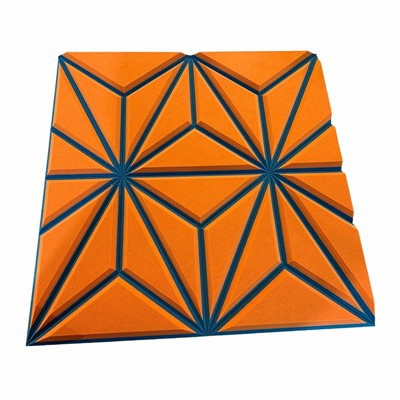

Yo! I'm a supplier of PET acoustic panels, and today I'm gonna chat with you about how these bad boys affect the acoustics of a room. PET, or polyethylene terephthalate, is a game - changer in the world of acoustic solutions, and I'm stoked to share the deets with you.
Understanding Basic Acoustics in a Room
Before we dig into how PET acoustic panels work, let's get a quick crash - course on room acoustics. When sound waves hit a surface in a room, three things can happen: they can be reflected, absorbed, or transmitted. Reflection is like a ball bouncing off a wall. The sound just bounces back into the room, which can lead to echoes and a noisy, chaotic environment. Absorption is when the sound energy is soaked up by the surface, reducing the amount of reflected sound. Transmission means the sound passes through the surface to the other side.
In a room without proper acoustic treatment, sound reflections can build up and create a mess. You've probably been in a big, empty hall where your voice echoes like crazy. That's because there aren't enough surfaces to absorb the sound. This can be a real pain, whether it's in a home theater where you want crystal - clear dialogue, a classroom where students need to focus, or a restaurant where you're trying to have a chill conversation.


How PET Acoustic Panels Absorb Sound
PET acoustic panels are like sound sponges. They're made from recycled PET materials, which are formed into a porous structure. When sound waves hit these panels, they enter the tiny pores and channels within the material. Inside, the sound energy gets converted into heat energy through a process called friction. It's kinda like when you rub your hands together, and the friction creates heat.
The porous nature of PET acoustic panels is key to their sound - absorbing ability. The more pores and the more complex the structure, the more sound they can gobble up. For example, PET Felt Acoustic Panels have a super - porous felt texture that's excellent at trapping sound waves. This is especially useful for high - frequency sounds, which tend to bounce around a lot and cause annoying echoes.
Controlling Reverberation Time
Reverberation time is a big deal in room acoustics. It's the time it takes for the sound to decay by 60 decibels after the source stops. A long reverberation time can make a room sound boomy and muddy. For instance, in a concert hall, if the reverberation time is too long, the notes can blend together, and it becomes hard to distinguish individual sounds.
PET acoustic panels are great at controlling reverberation time. By absorbing sound, they reduce the amount of reflected sound and speed up the decay of the sound. So in a hall that's normally super - echoey, adding PET Tiles can significantly cut down the reverberation time. This makes the room more acoustically balanced, whether it's for a live performance, a business meeting, or just hanging out and watching TV at home.
Sound Diffusion
While absorption is important, sound diffusion also plays a role in room acoustics. Sound diffusion is about scattering the sound waves evenly throughout the room. This helps to create a more natural and spacious sound.
PET acoustic panels can contribute to sound diffusion. Some types of PET Felt have an irregular surface that causes sound waves to scatter in different directions. Instead of having all the sound bouncing right back at you from a single point, it spreads out. This can make the sound in the room feel more immersive and less concentrated. For example, in a recording studio, diffusion helps to eliminate "hot spots" where the sound is too loud or too quiet, giving a more consistent listening experience.
Impact on Different Frequency Ranges
Sound comes in different frequencies, from low - frequency bass to high - frequency treble. PET acoustic panels can be tailored to work well across different frequency ranges.
For low - frequency sounds, like the rumble of a bass drum, thicker panels are often more effective. For example, 24mm PET Panels have more material to absorb the long - wavelength low - frequency waves. They can help to reduce the boomy, overpowering bass sounds that can make a room hard to listen in.
On the other hand, high - frequency sounds are more easily absorbed by thinner and more porous panels. So, if you're dealing with a lot of high - pitched noise, such as the screeching of chairs or the hum of electronics, thinner PET Felt Acoustic Panels can do the trick.
Aesthetic and Practical Considerations
One of the cool things about PET acoustic panels is that they're not just functional; they also look good. You can get them in different colors and styles to match the decor of your room. For example, Dark Grey PET Panels give a sleek and modern look, which is perfect for contemporary offices or high - end home theaters.
They're also easy to install. You can mount them on the walls or ceilings using simple adhesive or mounting hardware. This means you can quickly transform the acoustics of a room without a huge construction project.
Real - World Applications
Let's talk about some real - world scenarios where PET acoustic panels shine. In a home office, it can be really hard to focus if there's a lot of background noise. By installing PET acoustic panels on the walls, you can create a quiet and productive space. The panels absorb the sound from outside, like traffic or neighbors, and also reduce the reflections of your own voice if you're on a call.
In restaurants, the right acoustics can make or break the dining experience. No one wants to shout over the din of clattering dishes and chatter. PET acoustic panels can absorb the noise, making it easier for customers to have a conversation. They can also add a touch of style to the restaurant, enhancing the overall ambiance.
Schools and universities also benefit from PET acoustic panels. In classrooms, clear communication between teachers and students is crucial. By controlling the reverberation and reducing background noise, these panels help students to better understand the lessons.
Conclusion and Call to Action
So, as you can see, PET acoustic panels have a huge impact on the acoustics of a room. They can absorb sound, control reverberation, contribute to sound diffusion, and work across different frequency ranges. Whether you're looking to create a quiet home environment, a professional - sounding office, or an inviting public space, PET acoustic panels are a great choice.
If you're interested in improving the acoustics of your room, I'd love to chat with you. We've got a wide range of PET acoustic panels to fit your needs and budget. Reach out to me, and let's start a conversation about how we can transform your space.
References
- Beranek, Leo L. “Acoustics.” American Scientist, vol. 54, no. 2, 1966, pp. 177–208.
- Craik, R. J. M. “Acoustics for Engineers.” Applied Acoustics, vol. 29, no. 3, 1990, pp. 161–162.
- Kuttruff, H. “Room Acoustics.” 4th ed., Elsevier, 2009.