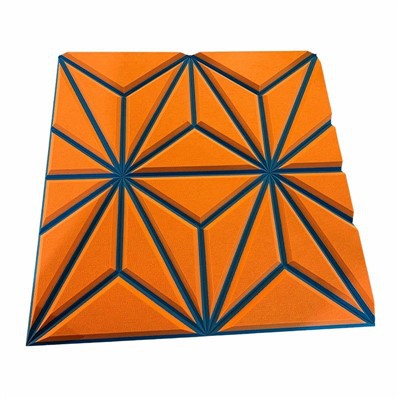

Do acoustic ceiling panels block sound completely? That's a question I get asked a lot as an acoustic ceiling panel supplier. Let's dive into this topic and see what's really going on.
First off, it's important to understand what acoustic ceiling panels are. These panels are designed to absorb sound waves, reducing the amount of noise that bounces around a room. They're made from various materials, like fiberglass, mineral wool, and even recycled PET. The Acoustic Ceiling Panels we offer come in a wide range of styles and sizes to fit different needs.
Now, the big question: Do they block sound completely? Well, the short answer is no. No acoustic ceiling panel can completely block sound. Sound is a form of energy that travels in waves, and it can find its way through small gaps, around edges, and even through the panel itself to some extent.
Let's take a closer look at how these panels work. When sound waves hit an acoustic ceiling panel, some of the energy is absorbed by the panel's material. The porous structure of the panel helps to break up the sound waves, converting the sound energy into heat. This absorption process reduces the amount of sound that is reflected back into the room.
However, there are limits to how much sound can be absorbed. The effectiveness of an acoustic ceiling panel is measured by its Noise Reduction Coefficient (NRC). The NRC is a number between 0 and 1, where 0 means no sound absorption and 1 means all sound is absorbed. Most acoustic ceiling panels have an NRC between 0.7 and 1.0. While this means they can absorb a significant amount of sound, it doesn't mean they can block it completely.
There are also other factors that affect the performance of acoustic ceiling panels. For example, the size and shape of the room, the type of sound source, and the presence of other sound-absorbing materials in the room can all impact how well the panels work. In a large, open room with hard surfaces, the panels may be more effective than in a small, cluttered room.
So, if acoustic ceiling panels can't block sound completely, why are they still useful? Well, they can significantly reduce the amount of noise in a room, making it more comfortable and productive. They can also improve the acoustics of a space, making it easier to hear and communicate.
For example, in an office setting, acoustic ceiling panels can help to reduce the noise from conversations, phone calls, and equipment, creating a more peaceful and focused work environment. In a restaurant, they can help to reduce the noise from customers, making it easier to enjoy a meal and have a conversation.
At our company, we offer a variety of PET Acoustic Tiles and PET Ceiling Panels that are not only effective at absorbing sound but also environmentally friendly. These panels are made from recycled PET, which reduces waste and helps to protect the environment.
If you're considering using acoustic ceiling panels in your space, it's important to do your research and choose the right panels for your needs. You should also consider working with a professional installer to ensure that the panels are installed correctly and perform at their best.
In conclusion, while acoustic ceiling panels can't block sound completely, they can significantly reduce the amount of noise in a room and improve the acoustics. If you're looking for a way to make your space more comfortable and productive, acoustic ceiling panels are definitely worth considering.
If you're interested in learning more about our acoustic ceiling panels or have any questions, feel free to reach out to us. We'd be happy to help you find the right solution for your needs.
References


- Acoustical Society of America. (n.d.). Acoustics Basics. Retrieved from [Website URL]
- Building Science Corporation. (n.d.). Acoustic Ceiling Panels. Retrieved from [Website URL]